
What is a fragrance made of?
NATURAL
Ingredients
or
SYNTHETIC
Ingredients

Raw Materials
NATURAL
Ingredients
SYNTHETIC
Ingredients


NATURAL
COMPLEX SUBSTANCES
Contain a lot of different molecules
Cannot be obtained for everything (muguet, lilac, violet flower, fruits)
Selection of naturals used in perfumery
Different smell depending on geographical origins
Crop dependant
EXTRACTED FROM
- Flowers – Leaves – Buds
- Fruits – Berries – Seeds
- Woods – Moss – Barks
- Roots – Rhizomes
- Resins – Gums
SYNTHETIC
SINGLE MOLECULES
Different processes of synthetisation
Two types of synthetics
Nature identical – reproduction of molecules which exist in nature
100% synthetics – creation of molecules which don’t exist in nature
LABORATORY WORK
- Alcohols – Acetals – Esters –
- Aldehydes – Cetones – Acides
- Sulfides – Thiols
- Amines
- Nitriles


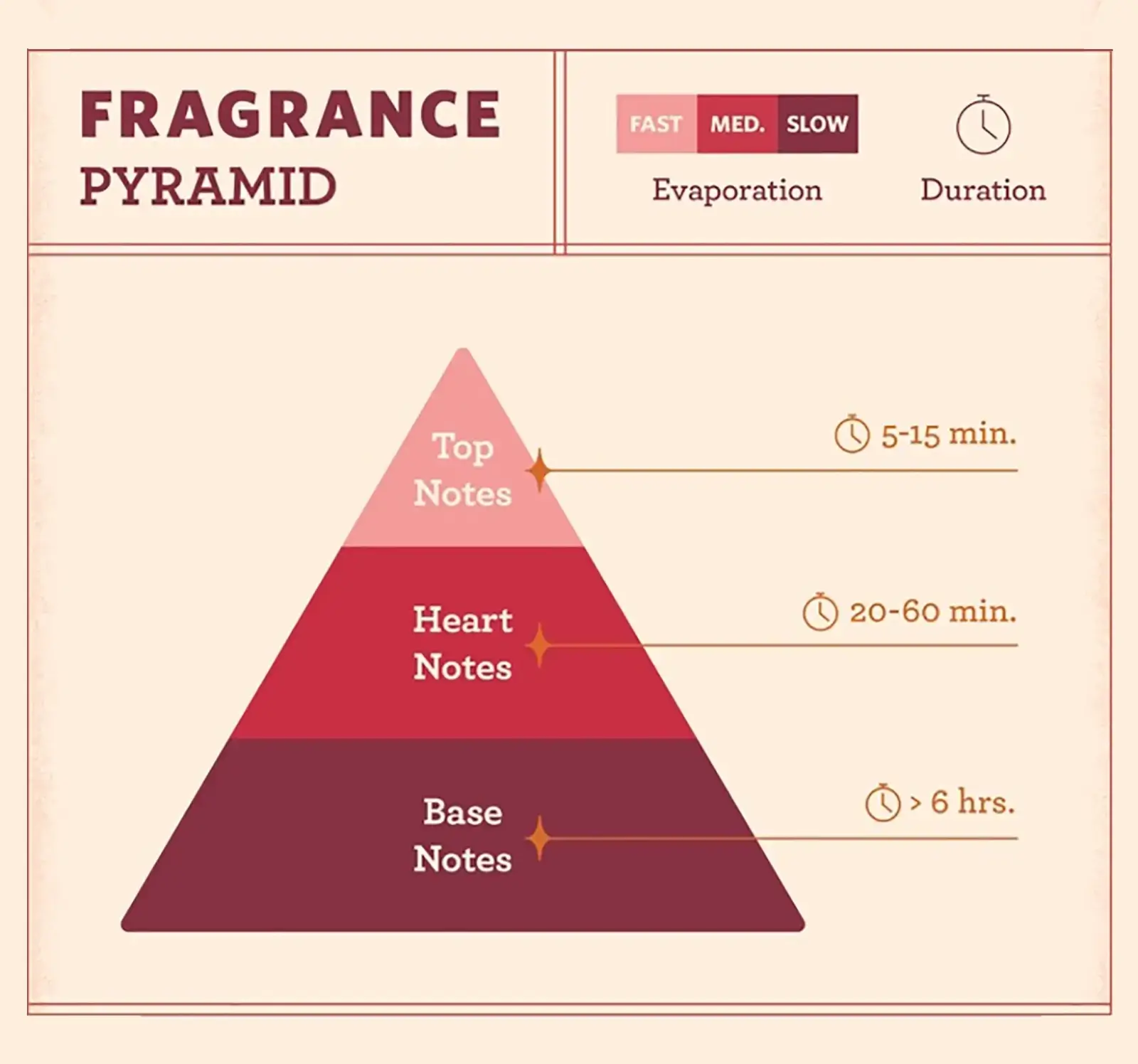
OLFACTIVE PYRAMID
Top, Heart, Base - What Does It All Mean?!
Perfume can play an important role in our wardrobe. Whether you prefer to apply your signature scent for a date night or for a work day in the office, fragrances help give us a certain aura and presence. Part of what creates this presence for each person is the use of fragrance notes. Similar to how musical notes make up a song, fragrance notes are the individual components that, when combined, form a unified, pleasing perfume.
Below is a guide that explains what fragrance notes are and everything you need to know about them to better understand your favorite perfumes.
Fresh Notes
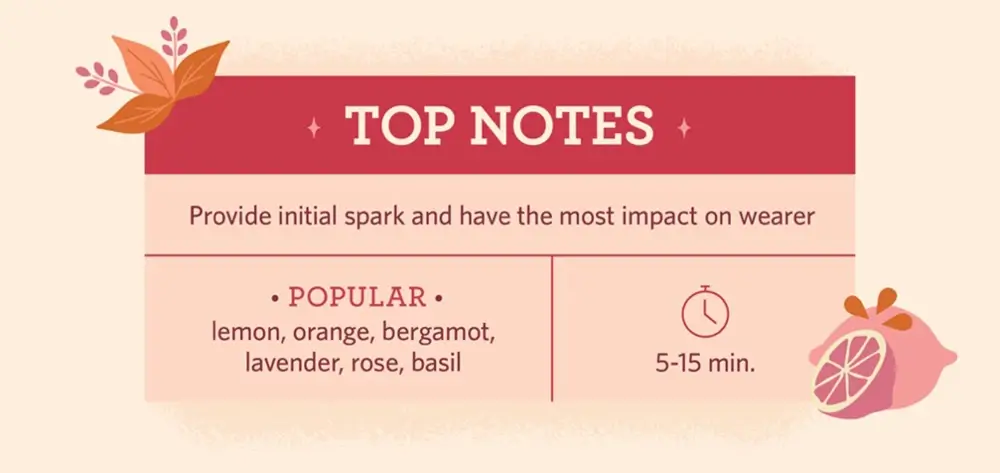
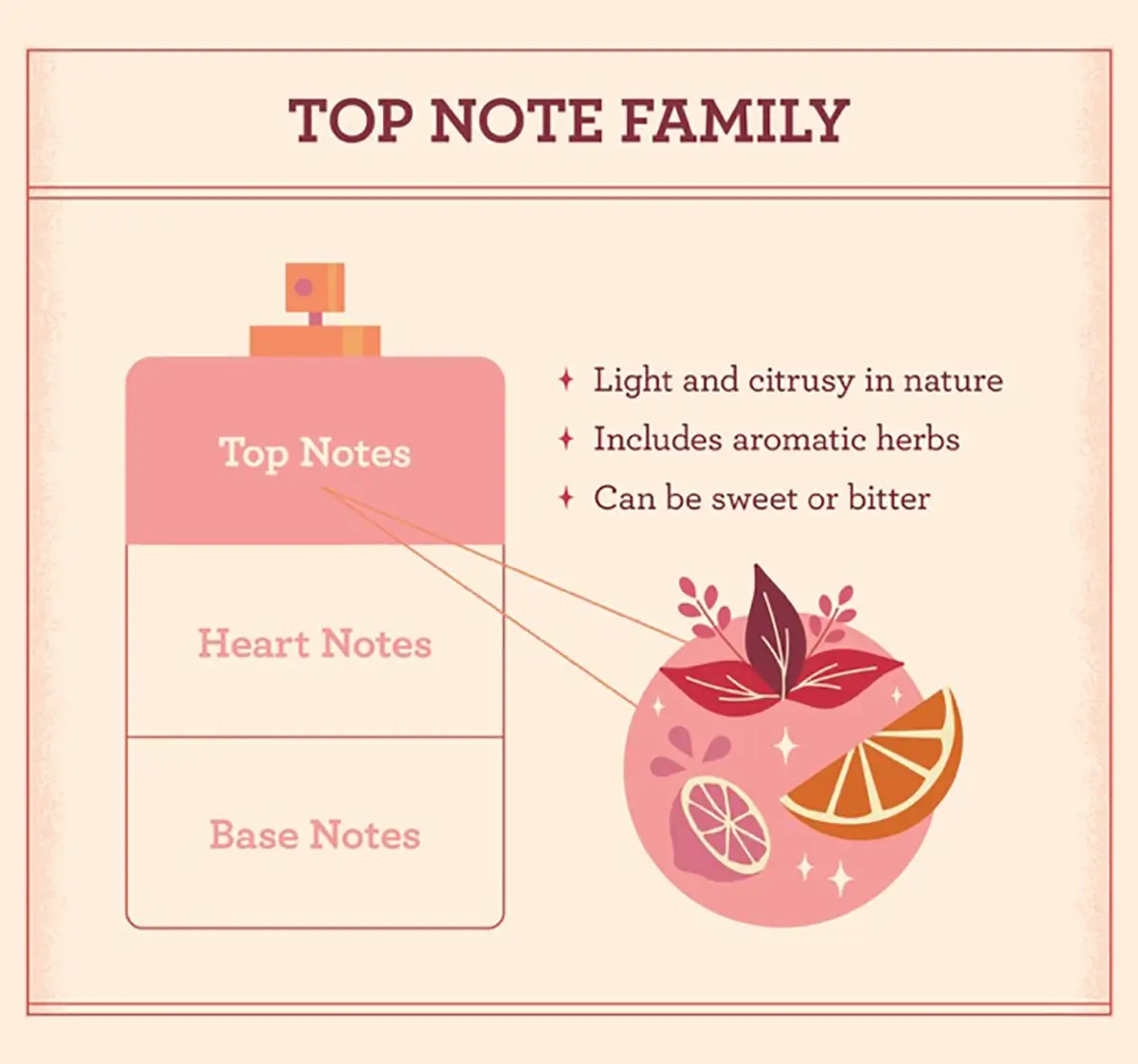
Fresh notes are light and citrusy in nature, making them popular as top notes. Notes like orange and bergamot give a fragrance its freshness and sweetness, while lemon and bergamot have a more bitter sharpness.
Floral Notes
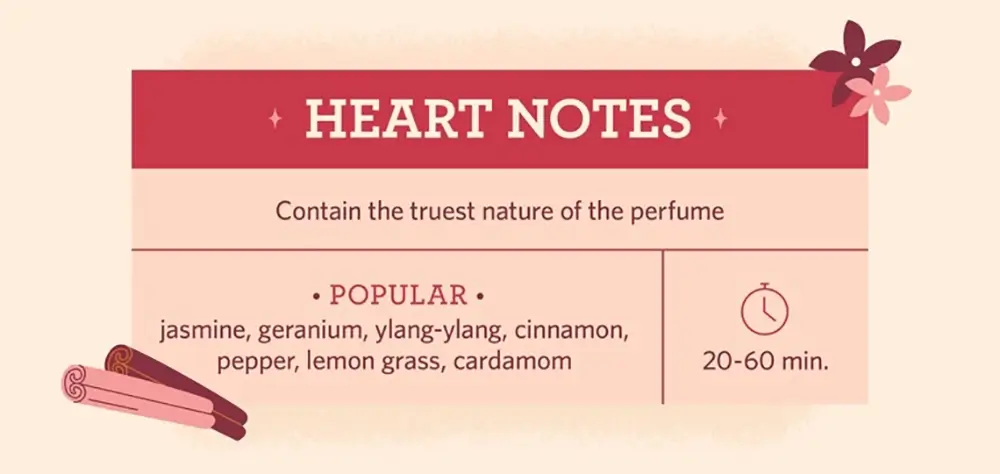
Floral notes add a natural feel to a fragrance. They are often used as top or heart notes and can be mixed with other notes for a more dramatic scent. Jasmine is another popular floral note with its fruity and white floral scent, while ylang ylang adds a more tropical touch.
Fruit Notes
Fruity notes are most commonly used as middle notes, as they blend easily with other notes and can add more depth to a fragrance. For example, blackberry adds a rich, musky scent, while notes like apple and strawberry give off a sweet and juicy vibe.
Spice Notes
Spice notes are used to add warmth and potency to a fragrance, mixing particularly well with floral notes in the heart of a perfume. Notes like cinnamon and nutmeg add spice and sweetness, while others like rosemary and basil possess an herbal quality.
Wood Notes
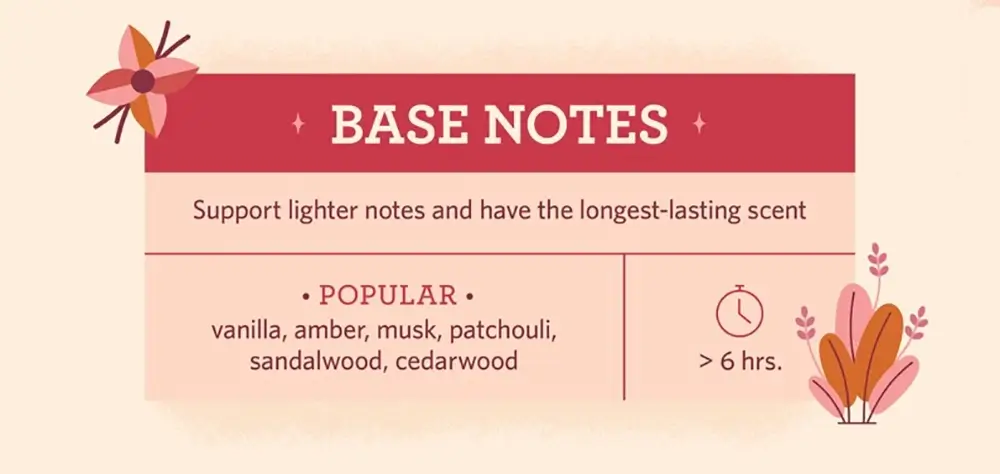
Sandalwood and patchouli are two wood notes that are often used in a fragrance’s base to strengthen the scent’s lifetime. While most wood notes have an earthy quality, some like cedarwood and oud provide a nice sweet scent.
Musk Notes
Musky notes are most frequently found in the base notes of fragrances. Their richness helps to fill in the foundation and increase the duration of the scent. The different types of musk, from black musk to cashmere musk, means that these scents can add a unique trait to any fragrance.
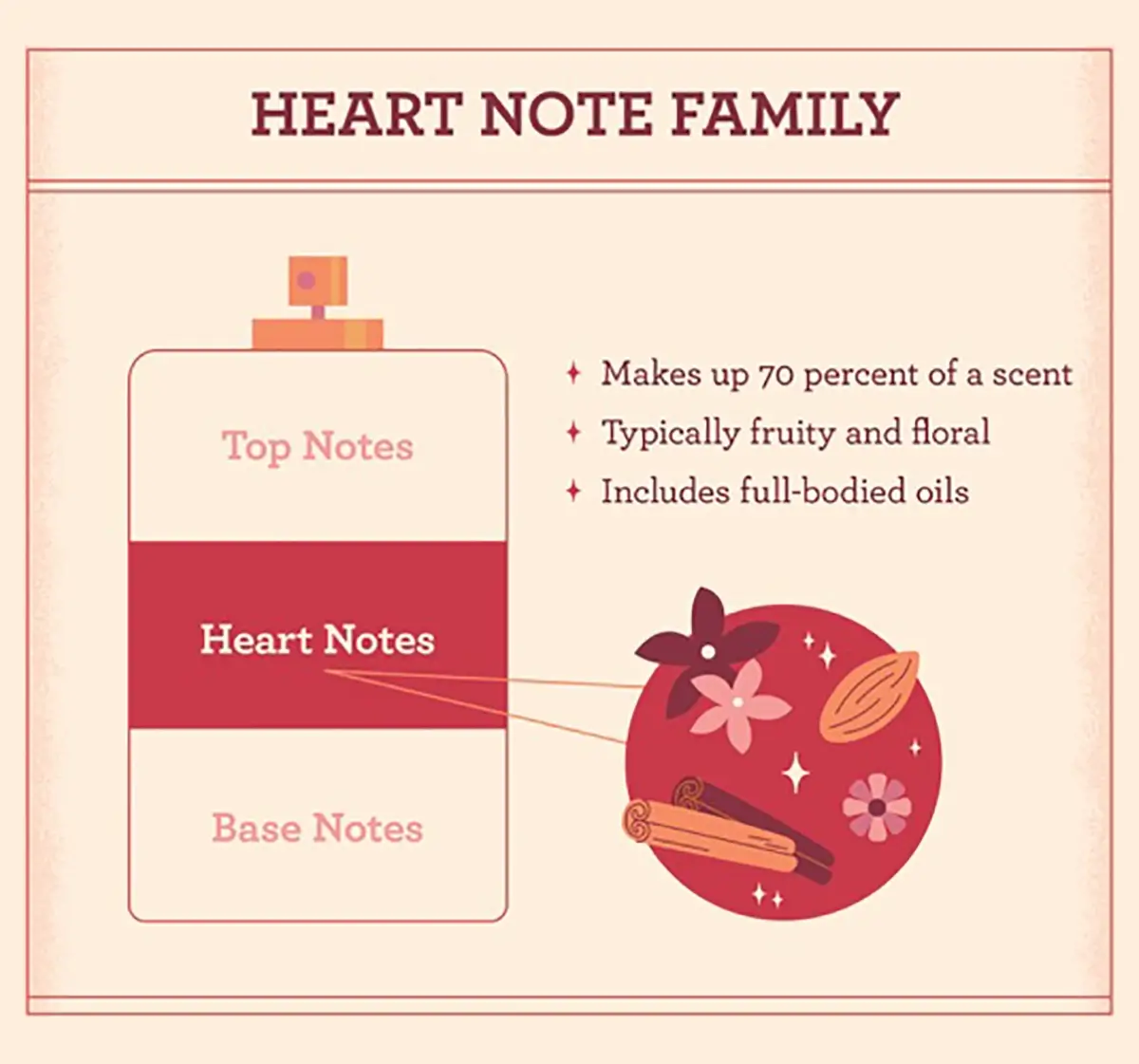
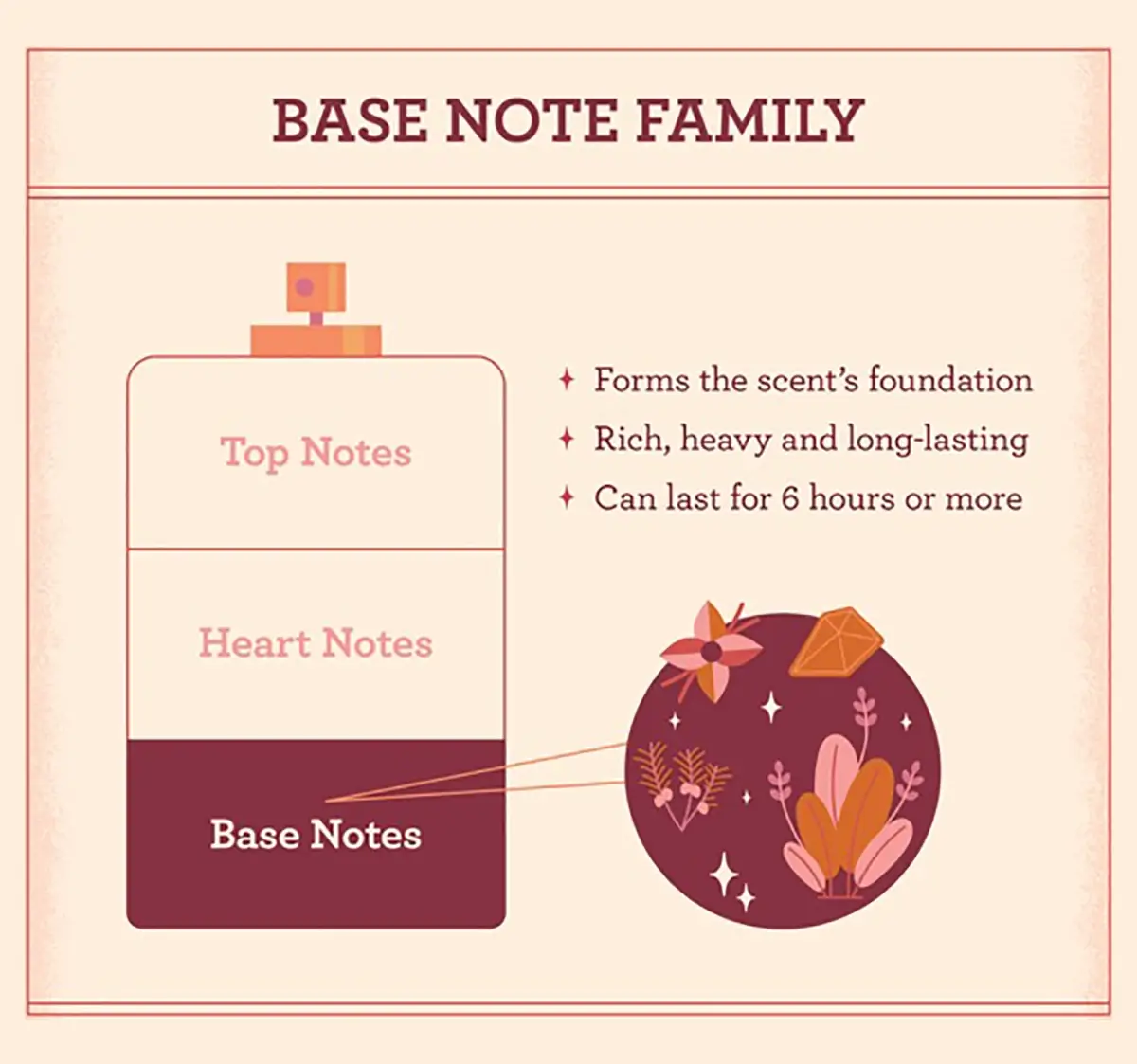
Fragrance notes play an important role in a perfume’s appeal. The composition of the different notes of a perfume and their interaction with your skin are what make a perfume unique. Without combining different notes, a perfume’s scent would just not be as pleasant.
Since there are so many notes, it can be challenging to pick the ones that you like. One way to start learning your own preferences is to become familiar with the fragrance wheel. After you’ve determined your favorite notes, check out our collection of perfumes and colognes to find your unique scent.
sources from https://www.shayandblue.com/blogs/journal/top-heart-base-what-does-it-all-mean
